Innovation Workshopping
Learnings from the NTNU Innovation Workshop
By Diane Esson, Sept 2026
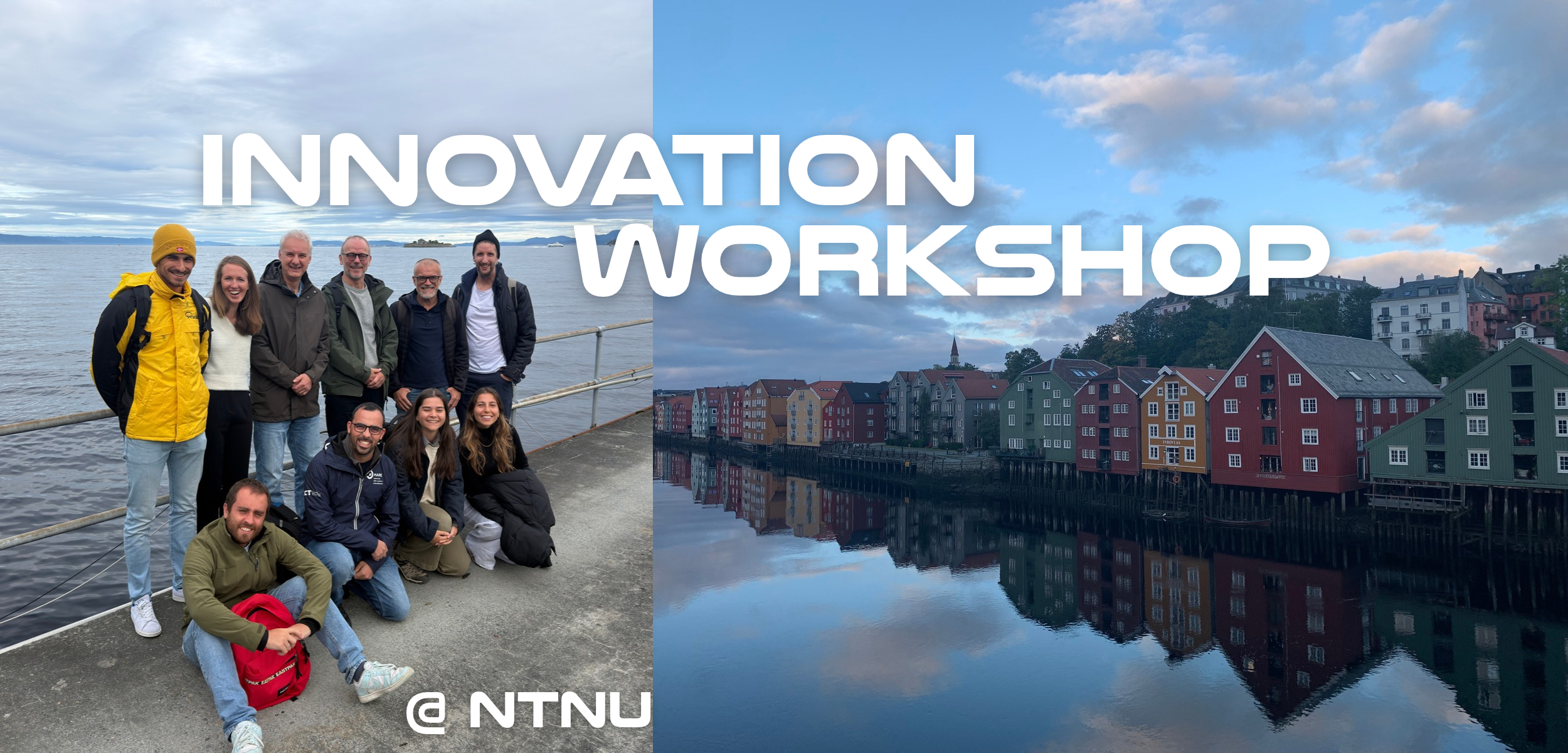
From 14-18 September, 8 members of the MARE-Madeira / ARDITI team travelled to Trondheim, Norway for the TWILIGHTED Innovation Workshop. This capacity-building event was designed to brainstorm new low-cost adaptations to imaging and sensing technologies with experts at NTNU and GEOMAR, as well as to share best-practice in taking an innovation from an idea to a commercial activity.
Trondheim’s Ocean Technology Ecosystem
The first two days of the workshop were dedicated to exploring the ocean technology ecosystem in Trondheim and sharing best-practice in innovation and IP-related processes at NTNU. Six members of MARE-Madeira and two members of ARDITI’s Projects and Innovation Department visited ocean technology spin-offs from NTNU research labs (Blueye, co-founded by TWILIGHTED leadership Martin Ludvigsen, and Skarv Technologies) and Trondheim’s Ocean Autonomy Cluster. Some of the key learnings from these visits were the diverse possibilities in funding structures, the value in investing time to understand the market opportunity (before product development), and the various commercial sectors available to ocean technology companies.
In addition to visits to startups and the ocean cluster, participants also had the chance to visit the Shore Control Lab, where autonomous vehicles can be (simultaneously) controlled from land, and NTNU and SINTEF SeaLab and their aquaculture and oceanography facilities.
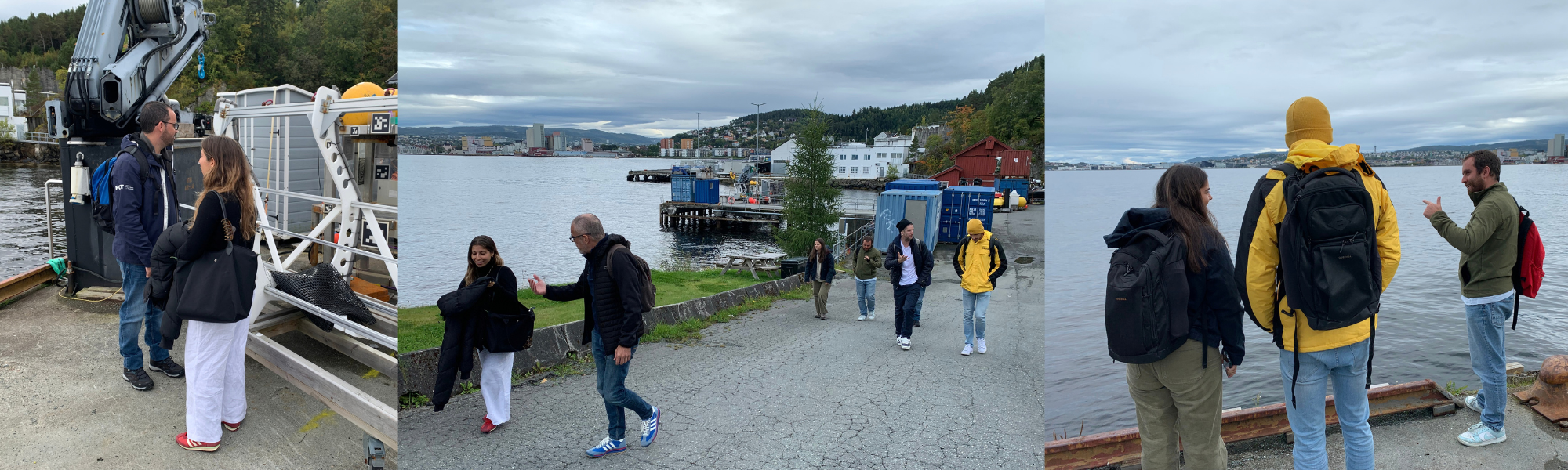
Photos: MARE-Madeira and ARDITI teams exploring NTNU’s Marine Biology Station, © Diane Esson
Best-Practice in Innovation and IP Management
Head of Innovation at NTNU’s Department of Marine Technology, Kjell Olav Skjølsvik, shared the process and agreements in place at NTNU for defining, protecting and supporting technologies with commercial potential. Learnings included the value of an institutional innovation policy (with particular reference to institutional ownership of IP generated via employment and reasonable compensation for researchers), the pitfalls researchers fall into (e.g. not reading consortium agreements and sharing innovations or code with partners before it has been registered as background IP) and the decision process for licensing IP vs spinning out the technology as a stand-alone company. Senior Research Advisor Antonio Vasilijevic followed this with a review of EU funding available for later-stage technology development.
Hands-On Innovation
The rest of the workshop was dedicated to hands-on innovation, starting with a Research Impact Canvas that can be used to analyze a product idea with respect to its purpose, beneficiaries and potential impacts. After this, the workshop allowed time for iterating on a deep-sea buoy and radio transceiver and pressure logger, with the goal of doing deployments to depths of 200-500m and recapturing with GPS coordinates. This part saw questionable success, as the system was lost during open water deployment!
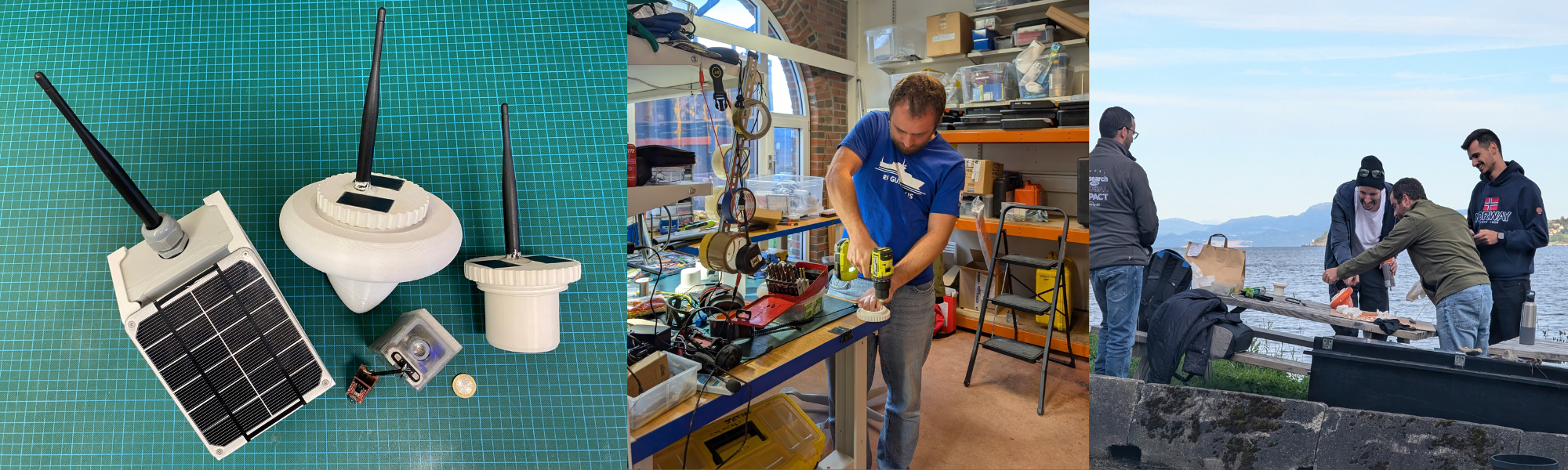
Photos: Hands-on iteration of a deep-sea buoy, © Marko Radeta (1) and Marisa Gouveia (2, 3)
Feedback
Innovation processes and IP management
| Main learnings | There were several moments where we recognised our own thinking in the frameworks being presented, which gave us confidence in the direction we are taking while also showing us where we still need to go deeper. The company visits were particularly useful for seeing how different paths from research to market actually happen in practice. We came away with a clearer picture of what needs to be in place for an innovation process to work. The discussions on push vs pull, TRLs as a way of looking at evidence and risk rather than just a number, and the different possible routes from research to actual use were particularly relevant to us. We also learned about IP: not just patents, but ownership, access rights, open source, licensing and the institutional rules needed to manage these properly. |
| Takeaways for ARDITI? | The biggest takeaway for us was that we do not need to rethink the direction we have been taking, but we do have a lot of work to make it operational. Some immediate areas are improving how we identify opportunities, linking decisions to actual evidence, and bringing IP considerations in earlier. |
Hands-on innovation
| Main learnings | The practical work on the buoy highlighted some of the challenges of designing for the marine environment. Although the final system did not work as intended, issues with buoyancy, electronics, and recovery demonstrated in a very practical way how important it is to consider the whole system and how it will behave under real conditions, rather than focusing only on individual components. I think there is a lot of value in researchers having enough technical knowledge to be more independent and confident when working with different equipment, rather than being completely dependent on the manufacturers. It also made me more interested in the possibility of contributing to the development or improvement of ocean technologies from an end-user perspective, particularly by bringing practical field experience into the process. |
| Personal impact | I’ve developed even more interest in robotics and will be more careful when publishing or sharing papers and/or projects that might be innovative. |
| Takeaways for MARE-Madeira? | The workshop made me realise that there is definitely potential for us to develop more of our own low-cost technology at MARE-Madeira, particularly because many ideas can come directly from problems we encounter in the field. However, I also learned that having an idea for a useful piece of technology is only a small part of the process. Actually developing it into something reliable takes time, repeated testing, funding and people with the right technical knowledge. These are not always resources that we have readily available at MARE-Madeira. This is where I see a lot of value in collaborations and projects like TWILIGHTED. |
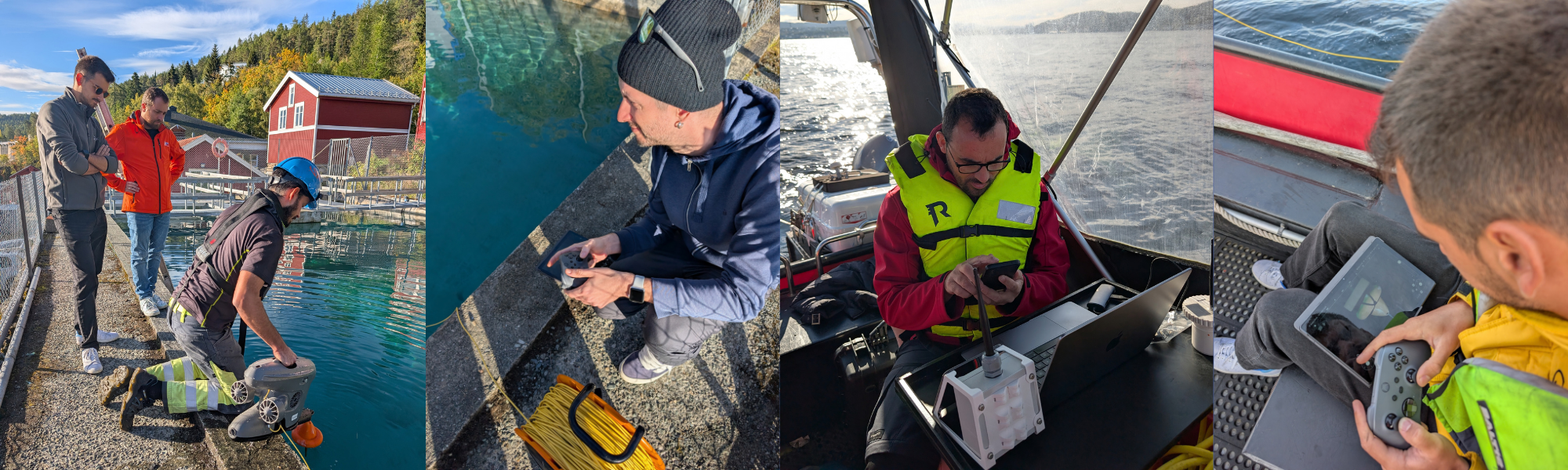
Photos: Deployment of deep-sea buoy, © Marisa Gouveia
Overall, the workshop brought numerous insights into the innovation process that can be implemented at ARDITI and MARE-Madeira, as well as more opportunities to strengthen relationships between our research institutions. Hands-on innovation developments were more limited and will be a renewed focus of the RD&I Workshop in 2027, allowing for the flow of more creative thinking between our marine technology and research teams.
Attendees: MARE-Madeira: Marko Radeta, João Pestana, Dinarte Vieira, Marisa Gouveia, André Almeida, Diane Esson; ARDITI: Paulo Abreu, Ana Mota
NTNU Organizers: Martin Ludvigsen, Ana Širović, Antonio Vasilijevic, Kjell Olav Skjølsvik, Pedro de la Torre