© Patrícia Nunes (MARE-Madeira)
Cabo Verde Workshop 2026
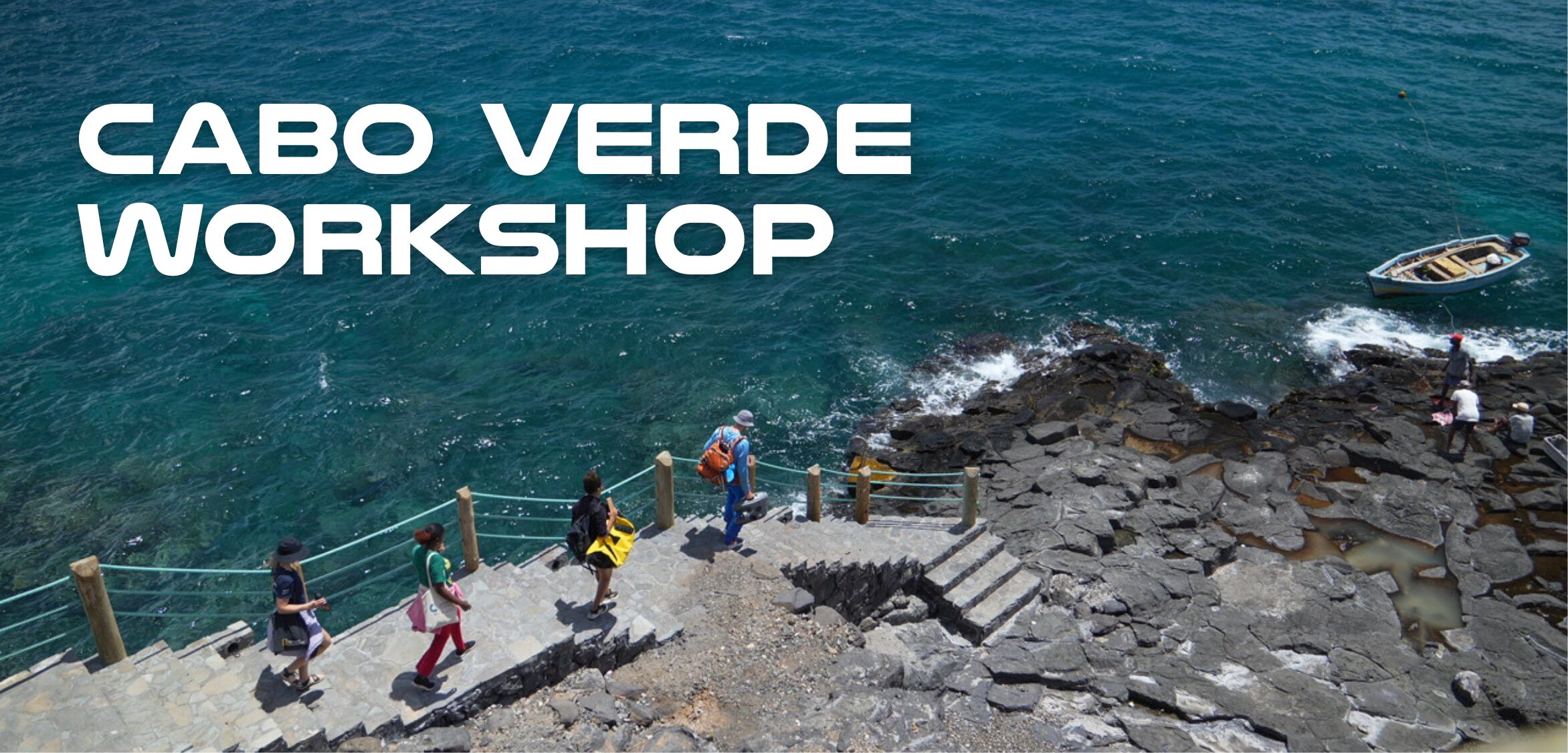
From the 18 to 25 March, TWILIGHTED coordinated an ocean literacy workshop, a scientific symposium and a fieldwork excursion in Cabo Verde. Taking advantage of GEOMAR’s longstanding partnership with the Institute of the Sea (IMar) in Mindelo, São Vicente, and spearheaded by the GEOMAR TWILIGHTED team, this event combined training, networking, outreach and scientific research for a memorable week and a half in this southernmost archipelago of the Macaronesia Region.
Ocean Literacy Workshop
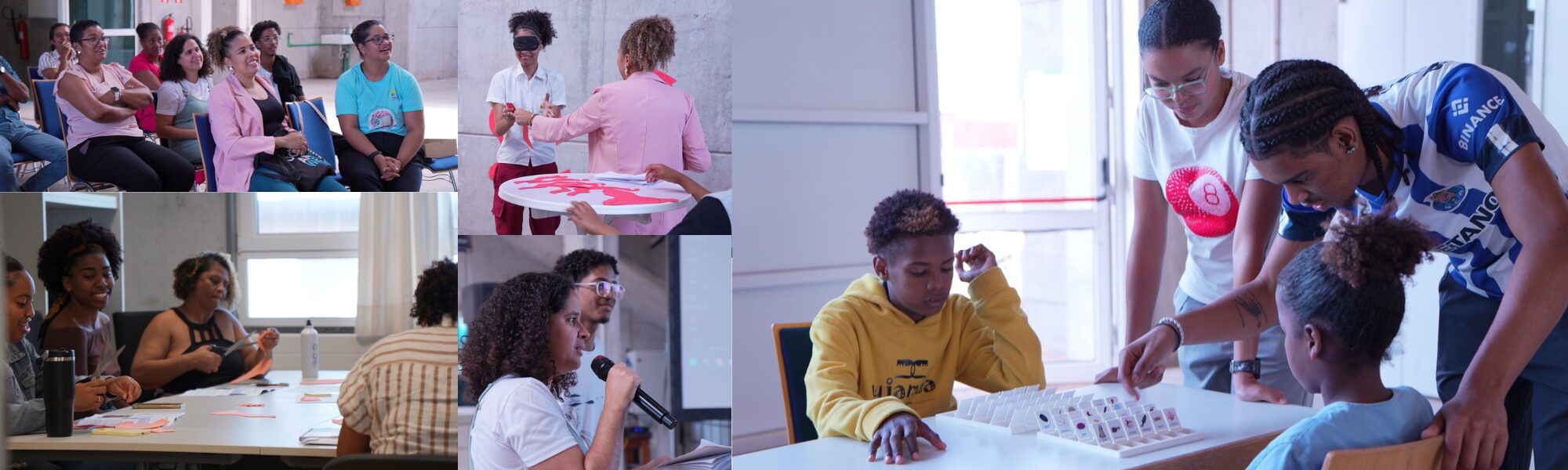
The Ocean Literacy Workshop on 18 March was organized in partnership with IMar and welcomed researchers, educators and non-profit organizations related to ocean science and conservation in São Vicente, Cabo Verde to a morning of sharing ocean literacy initiatives and learnings. Following a joint brainstorming session for activities, workshop participants then led an Ocean Fair (Feira do Mar) that was open to the community. Throughout the afternoon, this Ocean Fair was visited by approximately 40 school students – ranging from elementary school to high school – who participated in games, quizzes and a VR experience.
© Patrícia Nunes (MARE-Madeira)
First Macaronesia Marine Biology and Technology Symposium
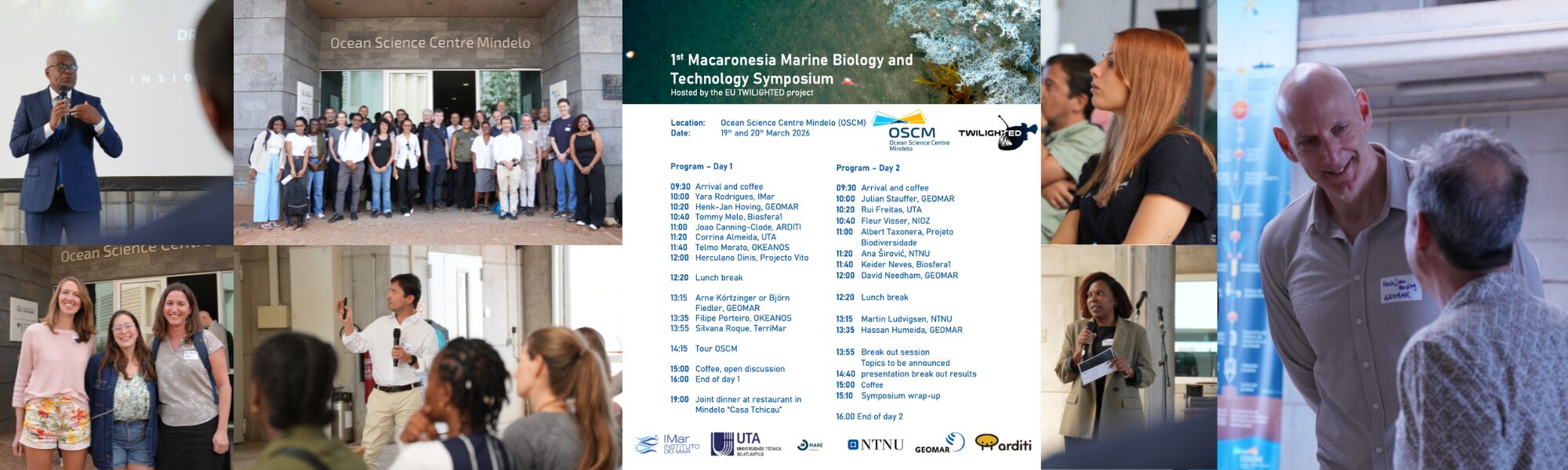
Following this workshop was a two-day scientific symposium for researchers across Macaronesia and partners. Coordinated by GEOMAR, the 1st Macaronesia Marine Biology and Technology Symposium was held on the 19 and 20 March and brought together regional senior researchers and conservation organizations to discuss research progress, challenges and opportunities. With discussions ranging from coastal taxonomy to cetacean monitoring to deep-sea research initiatives, the symposium opened the door to greater collaboration in future. Discussions were had on a lack of human resourcing in some regions, as well as increasing the power of local initiatives through regional partnerships and resource sharing. The Minister of the Sea of Cabo Verde reinforced the value of this conference through his address, which extolled the importance of science and the blue economy on the country, its vision for the future and international partnerships.
© Patrícia Nunes (MARE-Madeira)
Santo Antão Fieldwork
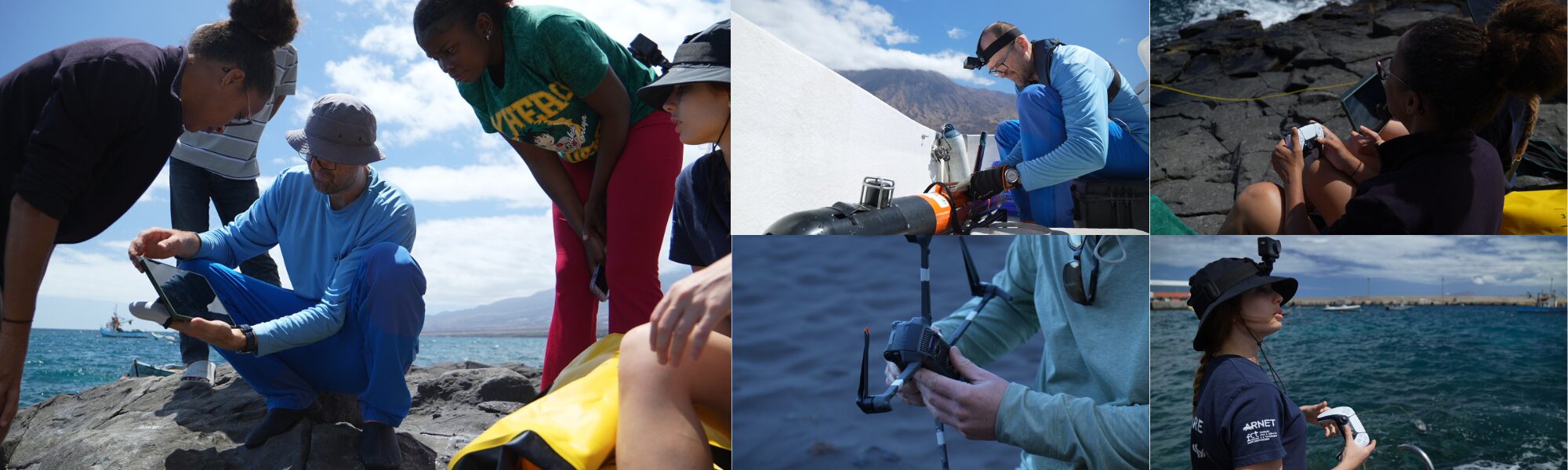
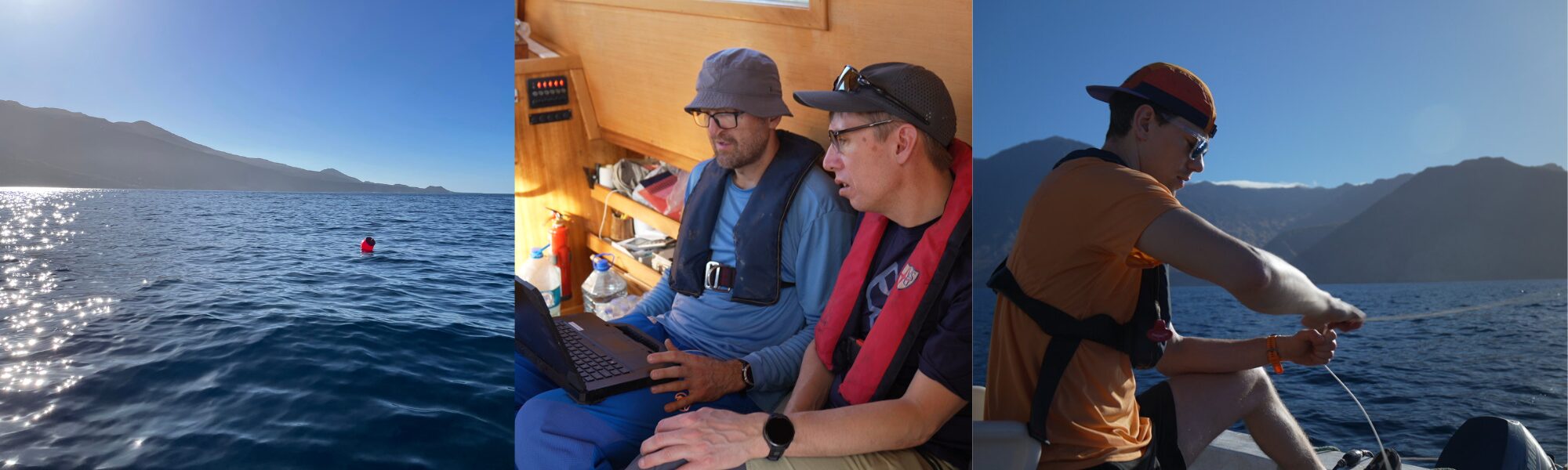
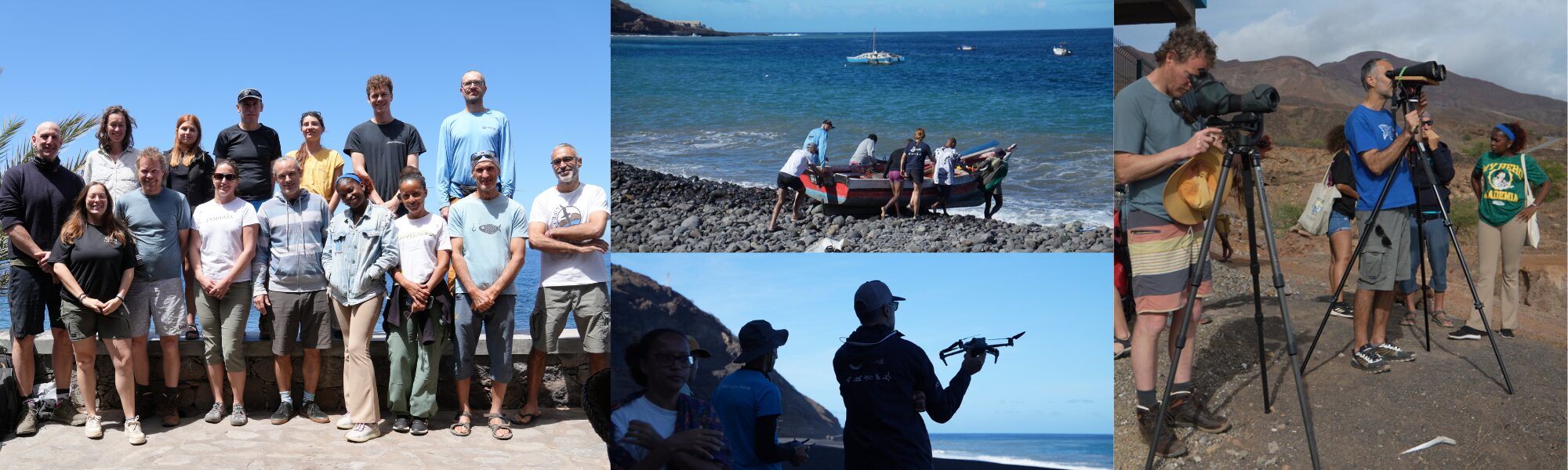
Finally, from the 21 to 25 March, our GEOMAR team organized a fieldwork campaign and training opportunity on the island of Santo Antão. Activities focused on cetacean monitoring combining a variety of visual and acoustic surveys and leveraging expertise from senior researchers at MARE-Madeira (Filipe Alves), NTNU (Ana Širović, Martin Ludvigsen and Sebastian Sikora), GEOMAR (Henk-Jan Hoving and Jan Dierking), NIOZ, Bios Cabo Verde, Kelp Marine Research and Terrimar. Knowledge sharing with students and a communications team member from MARE-Madeira, GEOMAR and IMar (who all brought their own expertise, as well!), further strengthened the value of this campaign as a hands-on training and networking opportunity for early career researchers.
© Patrícia Nunes (MARE-Madeira)
MARE-Madeira PhD student Laura Redaelli said this fieldwork demonstrated new methodologies and tools for analyzing acoustic data, as well as created new or stronger collaborations with acoustic experts in Macaronesia and Europe. With respect to how we can apply these learnings at MARE-Madeira, Laura said, “Regarding acoustics, we’re not very far from achieving a high standard; we just need to build more skills on the data processing side. For other tools used in this campaign such as AUVs, ROVs and deep-sea monitoring, I feel we mostly lack the resources to acquire them and the skills to manoeuvre them, so the road to achieving proficiency in these areas is probably longer.”
MARE-Madeira PhD student Sofia Nogueira said she also learned a lot from the lectures, which were delivered by the experts and took place after each day’s fieldwork. These lectures exposed her to methodologies for “fluke identification, the ecology of whales in Cape Verde, theoretical aspects of passive acoustic monitoring and technical aspects of imaging using underwater vehicles.” The fieldwork also improved her experience with a variety of imaging equipment, which she says is valuable for her PhD: “For the ROV, I had the opportunity to manoeuvre it on one of the days in the marina (it was a Plan B because the sea conditions were not good), so the other students and I were able to practice on our own. I also got to manoeuvre the ROV on the following day at sea to look at some beautiful garden eels!”
© Ana Širović (NTNU) and Patrícia Nunes (MARE-Madeira)
The fieldwork also generated scientific data with land-based observations of megafauna and avifauna, drone-based image capture of cetacaeans, and an experimental data collection using a digiscope (i.e. mounting a mobile phone to the eyepiece of a 30x resolution scope and recording the high-magnification image). Two autonomous passive acoustic recorders were also deployed (surface and subsurface) to attempt to capture cetacean vocalizations. Another finding of the fieldwork, although not planned, was the discovery of large swathes of litter – primarily plastic debris – in a dry streambed and on the beach. This litter was reported to environmental management authorities, as it would surely end up in the ocean at the next rain. All scientific findings will be included in a full fieldwork report and shared in open-access repositories.
Summary
The Cabo Verde Workshop was a really valuable experience for TWILIGHTED partners and collaborators across the Macaronesia region, strengthening relationships, sharing knowledge and deepening the scientific understanding of Cabo Verde’s marine species and ecology. Spanning community engagement, training and scientific discovery, the week in Cabo Verde upheld all of TWILIGHTED’s project objectives and set the stage for further work and collaborations – an all-round success! We’d like to give a round of applause to our TWILIGHTED partners at GEOMAR for leading this event and our collaborators at IMar for being invaluable with respect to local organization needs.
© Patrícia Nunes (MARE-Madeira)