Notes from the 2026 Baltic Cruise with GEOMAR
By Raquel Alves, Eva Iñiguez and Diane Esson, May 2026
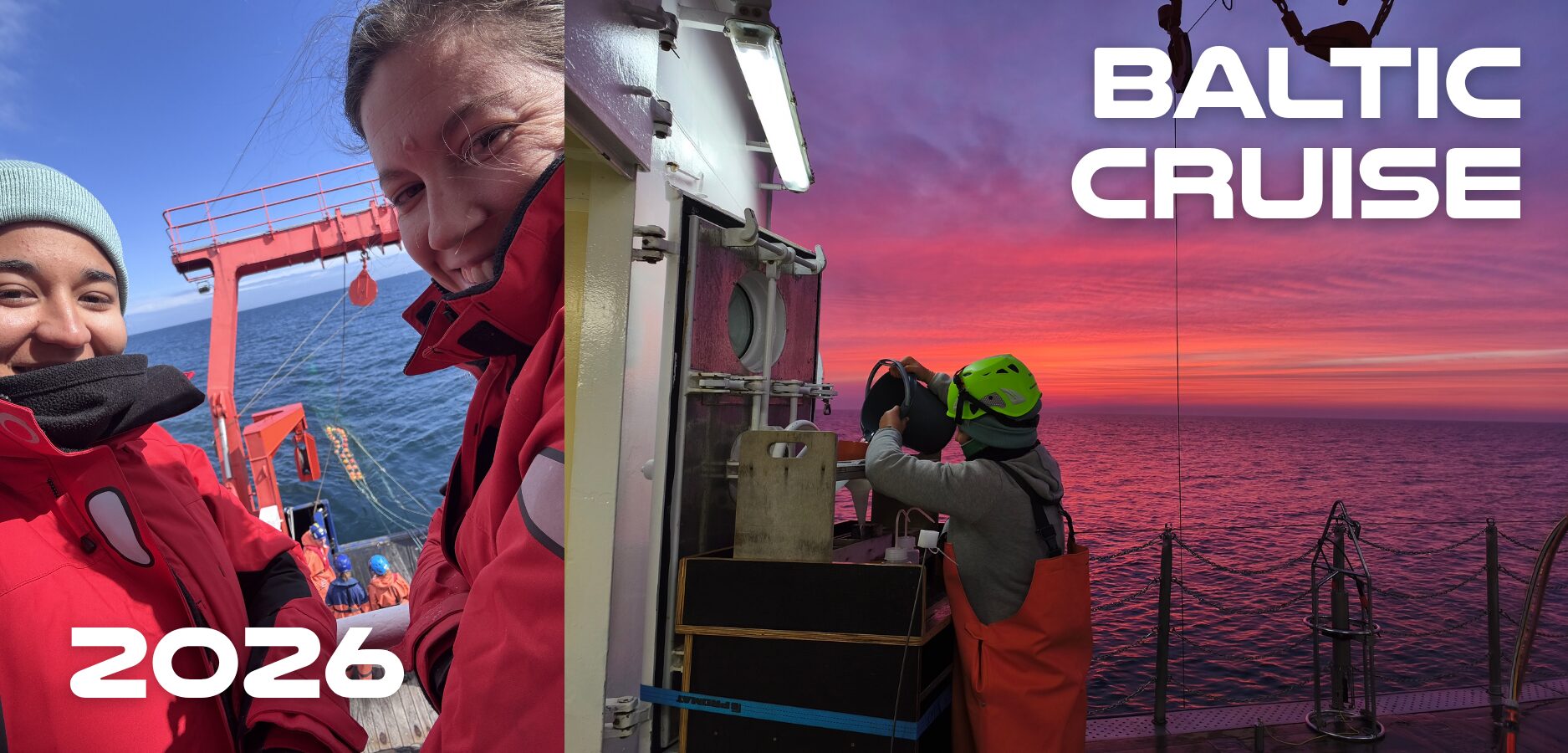
In April, Raquel Alves and Eva Iñiguez from MARE-Madeira (ARDITI) escaped stormy weather in Madeira and went to cruise on smooth seas in the Baltic. Like Rodrigo Silva in 2025, Raquel and Eva participated in this GEOMAR cruise as part of a TWILIGHTED training opportunity — gaining hands-on experience in a research expedition and learning many techniques that are transferrable to deep-sea research expeditions.
This was Raquel’s first scientific cruise. “One of the most interesting aspects for me was taking part in sampling activities. I especially enjoyed the fish larvae identification work, it was fascinating to see species such as cod for the first time!” she says. “Another unforgettable part was the shift work, because it allowed us to work during both sunrise and sunset at sea — something truly special!”
The AL649 cruise took place over five days onboard RV Alkor, led by researcher Hanna Rudnick and continued the annual tradition of monitoring planktonic communities, fish populations, and food webs in the Baltic Sea, which GEOMAR has coordinated since 1987.
Two main research activities took place throughout the cruise: fish stock assessments and plankton sampling.
Fish stock assessments
A trial was conducted using a specialized fishing net (‘Fish Lift for the Harter Lab’), which consists of interconnected nets of varying mesh sizes that selectively capture fish based on size. At the base of the net is a cage that allows the fish to be brought to the surface while minimizing decompression stress. This trial enables the collection of live cod for biological assessments while causing minimal (ideally zero) mortality. According to Raquel and Eva, collection took place where cod are no longer commonly found, but they were able to capture flatfish, herring and sprat, providing them with their first hands-on experience in Baltic fish species identification.
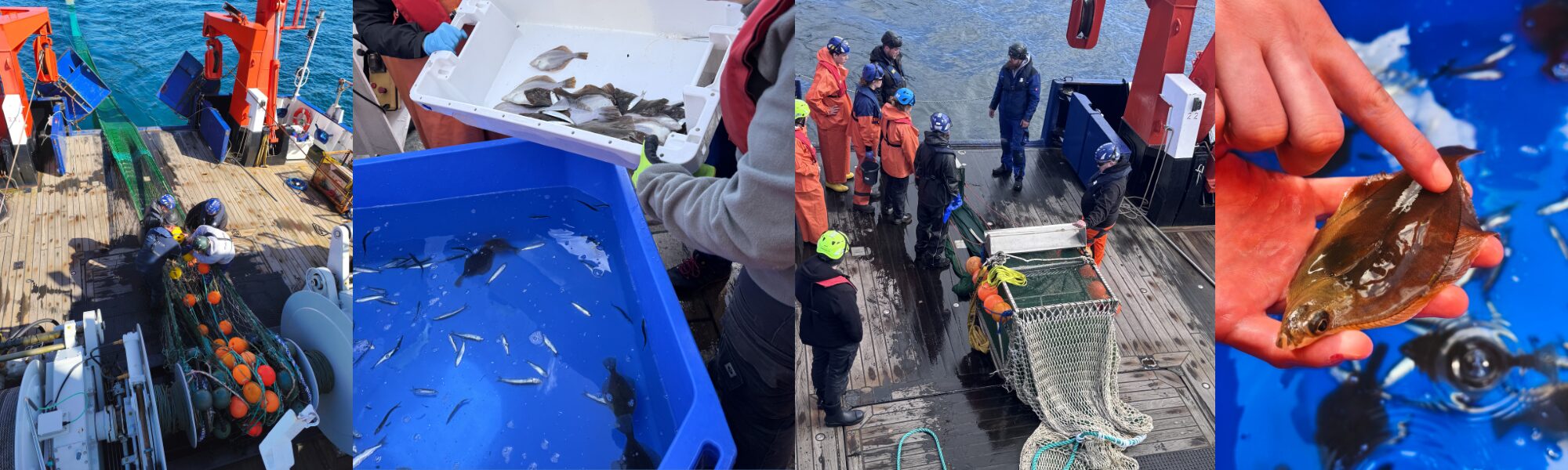
Photos: 1 & 3) Fish Lift for the Harter Lab, 2 & 4) Live catches for fish stock assessments. Credits: Eva Iñiguez and Raquel Alves
Plankton sampling
A two-day plankton sampling campaign involved sample collection using four bongo nets with different mesh sizes (500, 335, and 150 µm). At each of 35 sampling stations, the bongo nets and a CTD sensor (conductivity, temperature and depth) were deployed. Working in rotating teams across 4-hour shifts one person would be responsible for deployment operations, depth control and data recording (including flowmeter readings, timing and CTD data), while the other three team members would handle sample recovery, collector rinsing, filtration and preliminary sorting. Samples were examined for fish larvae, jellyfish and eggs, with the main objective being to find cod larvae. When cod larvae were found, these were measured, photographed and preserved.
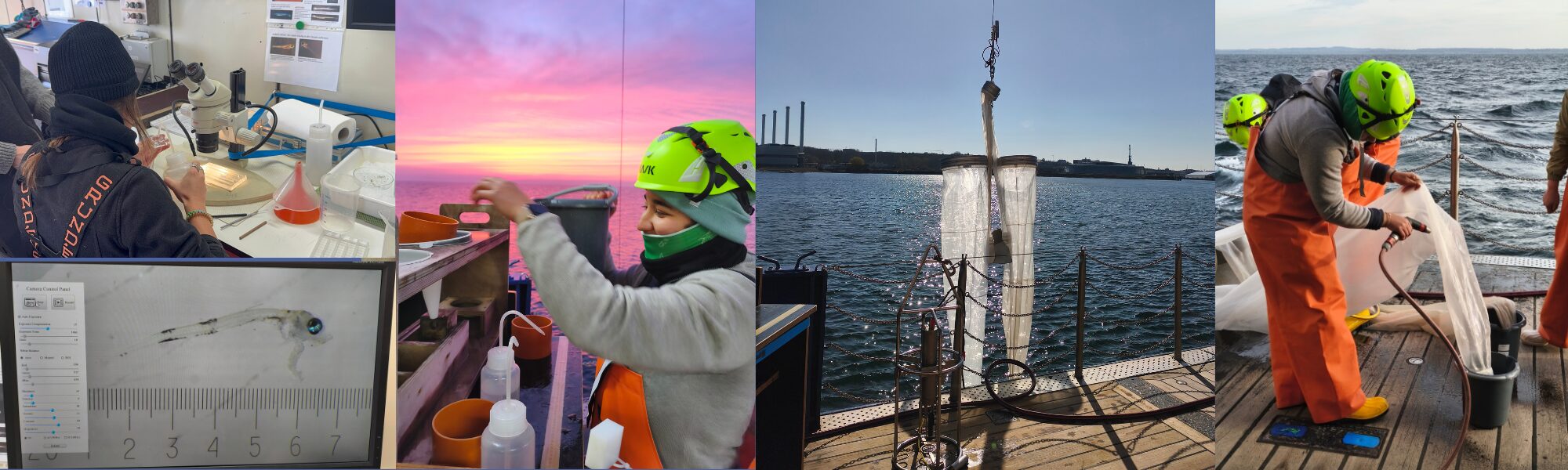
Photos: 1) lab station, 2) cod larva, 3) filtration station, 4) bongo nets and CTD sensor and 5) rinsing the nets. Credits: Eva Iñiguez and Raquel Alves
Eva and Raquel said the Baltic Cruise provided valuable insight into the organization and workflow of a scientific research cruise. It also helped them develop practical skills in the identification of Baltic fish and jellyfish species, which they’d never been exposed to before in Macaronesia.
“Beyond the scientific work, we were warmly welcomed by the entire team. In just a few days, the atmosphere onboard became both collaborative and friendly, creating space for personal connections. We are sincerely grateful for the opportunity to take part in this field trip and to everyone who made it possible. Special thanks to Hanna, Eric, Noah, Jana, Java, Ann, Anton, Stefan, Erica, and the crew and the captain for sharing their knowledge and making this such a rewarding experience.”
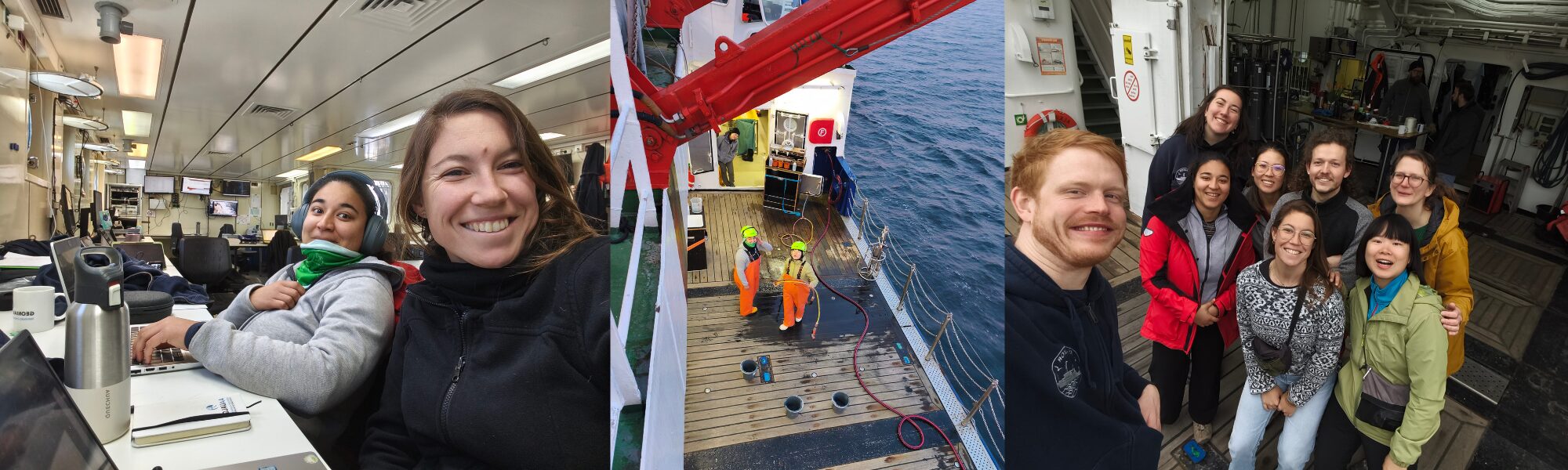
Photos: 1) Raquel and Eva, 2) plankton sampling shift, 3) with some of the crew!