

Testing low-cost tech at NTNU
By João Pestana and Diane Esson, Oct 2026
In February, Marko Radeta and João Pestana from MARE-Madeira (ARDITI) traveled to Norway to test our low-cost release system (MARS) to new depths. Building on the hydrostatic chamber tests carried out at GEOMAR in February 2025, the exchange evaluated the timed release mechanism during two ROV-supported deployments in the Trondheim Fjord. The resulting footage, telemetry and post-deployment inspections documented ignition performance at depths approaching 500 m and identified practical improvements to battery screening and release design. These results were included in a manuscript that is now awaiting peer review.
Objectives
Head of the MARE-Madeira Marine Technology and AI team, Marko Radeta, and research technician João Pestana visited the Applied Underwater Robotics Laboratory (AUR-Lab) at NTNU to collaborate with Martin Ludvigsen, Antonio Vasiljevic and Pedro De La Torre. The main goal was to observe MARS ignition in real time at deep-sea pressures. We also developed an ROV-mounted test arrangement, which we hope to aid future testing of affordable ocean-monitoring tools.
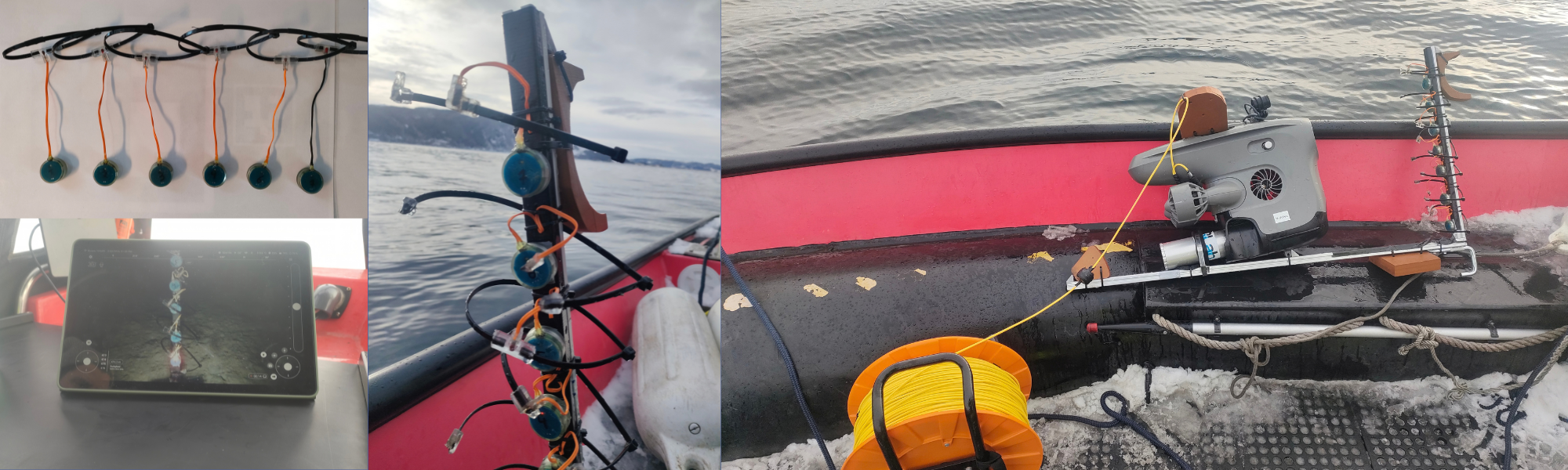
Photos: MARS system set-up on ROV and deep-sea deployment
Experiments
The field experiments were done from the NTNU Flyer using a Blueye ROV. We made an aluminium frame to hold the MARS units in front of the camera, adjusting buoyancy before deployment. Seven MARS units were tested in the first deployment to 475 m and 6 units were tested to 490 m; 11 of the 13 units successfully ignited (85% success rate)! The units that failed showed very low battery voltage after recovery, possibly due to the cold conditions (turns out, Norway in February is a smidge chillier than Madeira…).
The data collected from these experiments, including field methods, dive profiles, ignition footage and inspection of results are summarized in a new article, ‘MARS Igniter: Deep-Sea Evaluation and Pressure Rating of Affordable Programmable and Reusable Multi-Purpose Auto-Release System.,’ currently under review. Together with the GEOMAR hyperbaric chamber experiments, the results show that the MARS igniters can withstand pressures up to 5,000 dbar and operate down to almost 500 m in the field. The Norway tests also reveal some limitations of the release opening and battery that will be addressed in future work.
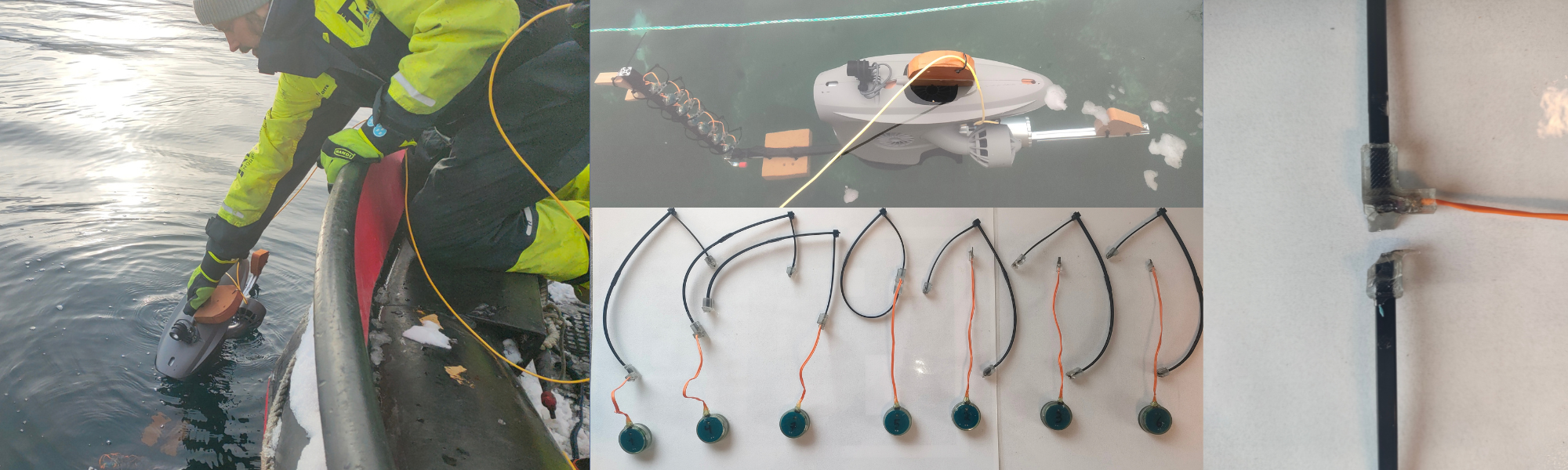
Photos: ROV retrieval and separation of MARS after deep-sea deployment ignition
Outcomes
In addition to the MARS testing success, this staff exchange strengthened collaborations between MARE-Madeira and NTNU AUR-Lab. Our team benefitted from hands-on experience in ROV integration, buoyancy adjustment, deep-sea test planning and interpretation of field evidence. The trip also connected the controlled testing undertaken in 2025 with an in situ validation campaign and a joint scientific manuscript, directly supporting TWILIGHTED’s capacity-building objectives for affordable deep-sea technologies. Just as exciting, it gave Madeira researchers a rare opportunity to see and work in the snow!
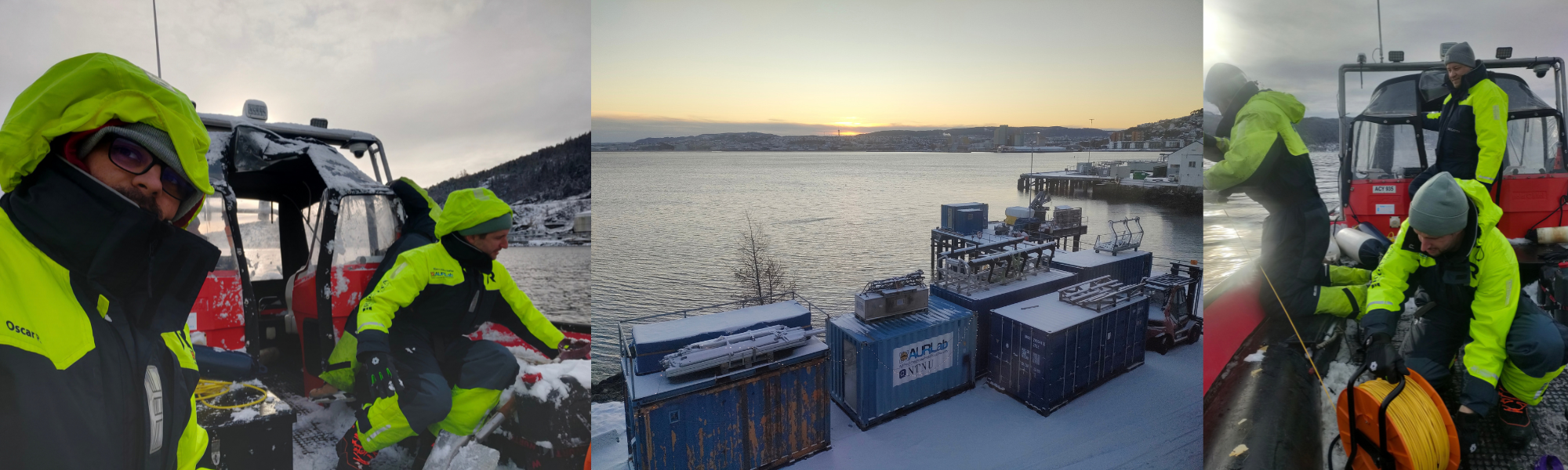
Photos: MARE-Madeira and AUR-Lab members on the snowy NTNU Flyer and overlooking the Trondheim Biology Station
All photos by João Pestana