We be cruisin’ (in Cabo Verde)
Notes from a research cruise training opportunity with GEOMAR
By Diane Esson and Sonia KM Gueroun, Dec 2025
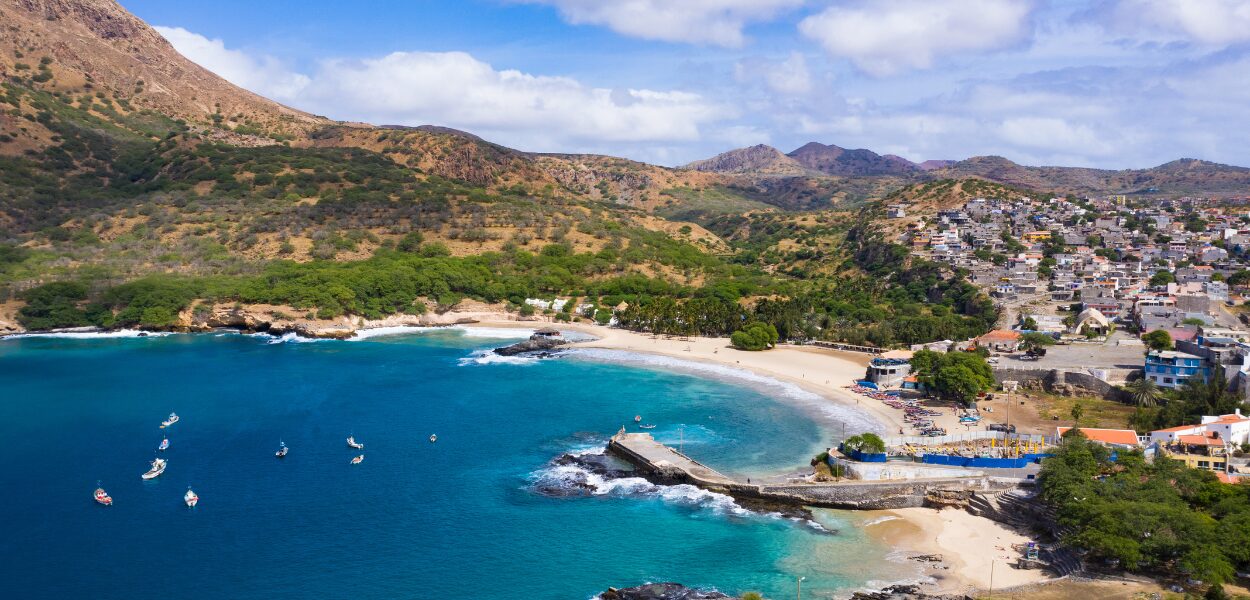
Earlier this year, MARE-Madeira researcher Dr Sonia KM Gueroun participated in a scientific cruise led by GEOMAR: the M206 BASIS expedition. For almost a month – 21 March to 25 April 2025 – Sonia and other international researchers investigated the deep-sea ecosystems around Cabo Verde from the German research vessel RV METEOR.
The purpose of the M209 cruise was to increase understanding of deep-sea ecosystems in this region through a combination of seafloor mapping and sampling benthic, benthopelagic and pelagic organisms across multiple water depths. Sonia focused on the biodiversity of deep-sea gelatinous zooplankton and food web dynamics, which she studied through net and remotely operated vehicle (ROV) sampling.
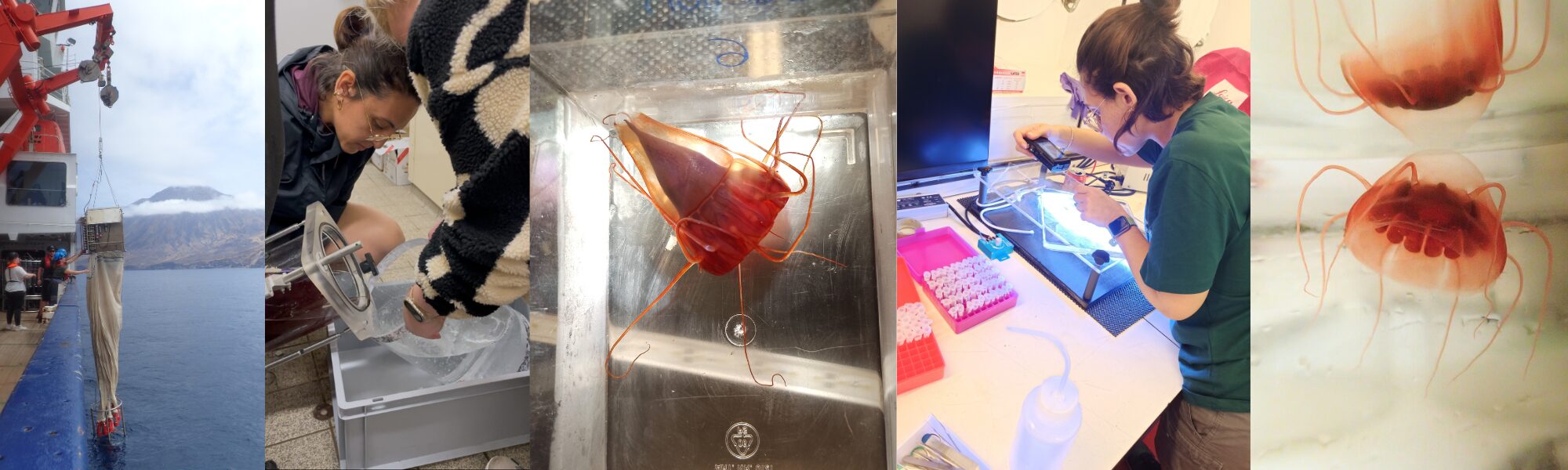
(1) Multinet deployment, (2) recovering a deep-sea Scyphomedusa specimen from the ROV sampler, (3, 5) various gelatinous species collected during ROV and net sampling, (4) processing night net samples. Credits: Sonia KM Gueroun, Ina Stoltenberg and Elisa Wendt
Net sampling: Sonia co-led the net sampling of the M209 cruise with fellow researcher Dr. Stoltenberg. They conducted multinet maxi deployments (see Rodrigo’s cruise notes for more info on each net type) in daytime and nighttime sampling at a six to seven depths from the surface to 1,000 m. Samples were preserved in formaldehyde and will be analyzed for community composition (diversity and abundance) and taxonomic level. They also used a WP3 net and a Tetranet at night for gelatinous organisms, fish and cephalopods used in stable isotope sampling (i.e. to analyze food web dynamics).
ROV dives: Sonia was also deeply involved in the ROV surveys, which were conducted for twelve hours daily. Preparation for each dive took place the previous day, including discussions between pilots and scientists about operational planning, objectives and how to document each mission. Sonia was also responsible for handling samples post-dive, including making decisions on processing and prioritzing based on whether the samples would be for 3D imaging, stable isotope analysis, diversity studies or genetic research. She says this experience improved her ability to work under pressure, make quick decisions and operate within a multidisciplinary team.
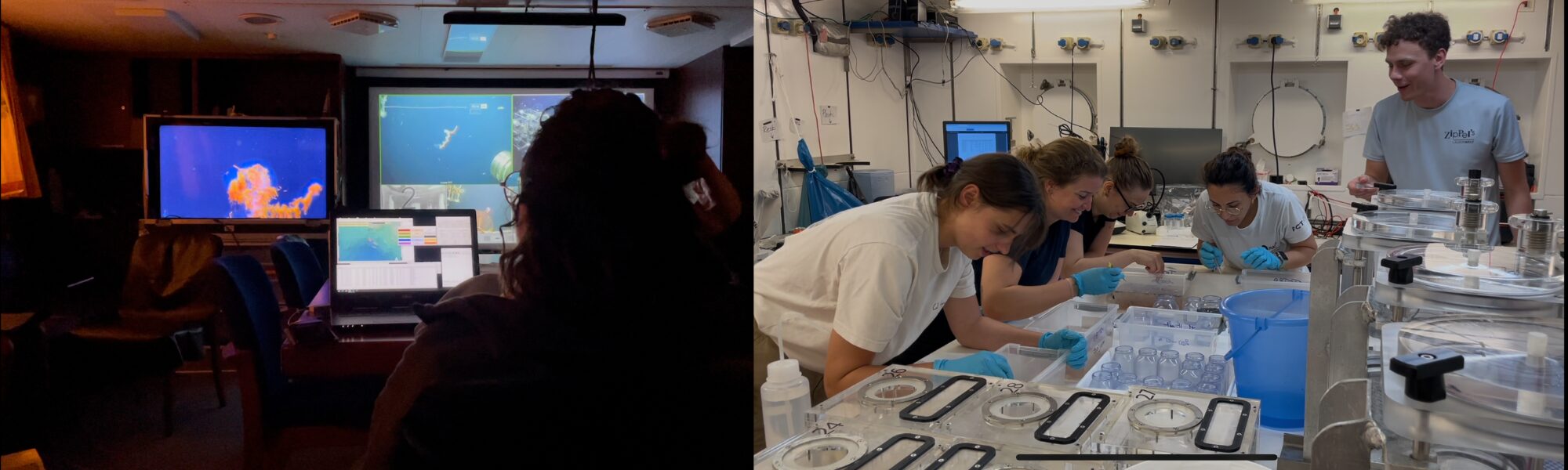
(1) ROV dive survey and (2) analyzing a specimen collected with the ROV. Credits: Elisa Wendt and Ina Stoltenberg
Although much of Sonia’s work aboard the M209 leveraged her experience in zooplankton research, she also received training in planning and operating the ROV dives. By the end of the cruise even led an ROV dive herself! In keeping with the objectives of TWILIGHTED as a capacity building project, this training expanded Sonia’s prospects in future deep-sea research cruises, where experience in planning and managing elements of a research cruise augments her ever-growing experience as a cruise-savvy researcher.
Sonia’s involvement in the ROV sampling also provided her with her first extensive experience with ctenophores, an organism group she had encountered only sparingly in her prior work. Sonia says she is eager to continue analyzing the data collected during the cruise, particularly in relation to the diversity and ecological role of gelatinous zooplankton, which remain underexplored in marine science. She says the M209 expedition has expanded her expertise in deep-sea ecosystems and marine food webs, and she looks forward to contributing to future publications based on the findings – including leading papers on zooplankton distribution and ROV-sampled gelatinous zooplankton diversity.